
Weight Converter Tool: Convert Weight Units Quickly and Accurately
Whether you’re tracking your fitness progress, following an international recipe, shipping a package overseas, or working on an engineering project, converting weight accurately is essential. Different countries and industries use different measurement systems, making a reliable weight converter tool an everyday necessity.
A Weight Converter Tool eliminates the need for manual calculations by instantly converting one unit into another. Instead of remembering complex formulas, you simply enter a value, choose the original and target units, and receive an accurate result in seconds.
From kilograms to pounds, grams to ounces, or metric tons to short tons, a quality converter saves time, reduces mistakes, and ensures consistency across personal, academic, and professional tasks.
Whether you’re a student, chef, fitness enthusiast, scientist, engineer, logistics manager, or online shopper, understanding weight conversion helps you make informed decisions with confidence.
Table of Contents
What Is a Weight Converter Tool?
A Weight Converter Tool is an online calculator that converts a value from one weight or mass unit into another using internationally recognized conversion factors. These conversion standards are based on the International System of Units (SI).
Instead of manually applying mathematical formulas, the tool performs the calculation instantly while maintaining a high level of precision.
Most modern weight converter tools support a wide range of units, including:
- Kilograms (kg)
- Grams (g)
- Milligrams (mg)
- Micrograms (µg)
- Pounds (lb)
- Ounces (oz)
- Stone (st)
- Metric Tons (t)
- Short Tons
- Long Tons
Many tools also allow users to switch between metric and imperial systems with a single click, making them ideal for international use.
Why Use a Weight Converter Tool?
People convert weight for countless reasons every day. While simple conversions may seem easy, mistakes can become costly in fields where precision matters.
A reliable weight converter tool helps you:
- Convert measurements instantly
- Avoid calculation errors
- Save time
- Compare international measurement systems
- Improve accuracy in scientific work
- Follow recipes correctly
- Calculate shipping costs
- Record medical measurements accurately
Because the tool performs calculations automatically, users don’t need to memorize formulas or conversion constants.
Why Accurate Weight Conversion Matters
Accurate conversions affect far more than convenience. In many situations, even a small error can produce significant consequences.
Healthcare
Doctors, nurses, and pharmacists often use kilograms when recording patient weight and calculating medication dosages.
An incorrect conversion between pounds and kilograms could affect treatment decisions.
Fitness and Nutrition
Fitness trackers, workout plans, and nutrition programs frequently use kilograms for body weight, while many gyms and athletes prefer pounds.
Accurate conversion helps users:
- Track progress consistently
- Compare international workout plans
- Calculate protein intake
- Record lifting performance
Cooking and Baking
Recipes from different countries often use different measurement systems.
For example:
- An American recipe may list ingredients in ounces.
- A European recipe usually uses grams.
Using the wrong conversion can change texture, flavor, and consistency.
Shipping and Logistics
Shipping companies calculate costs based on package weight.
Businesses regularly convert:
- Kilograms to pounds
- Pounds to kilograms
- Metric tons to short tons
Accurate conversions help avoid pricing errors and delivery issues.
Manufacturing and Engineering
Manufacturers rely on precise weight measurements when handling raw materials, quality control, and production processes.
Even minor inaccuracies may affect product quality or increase material waste.
Scientific Research
Laboratories use standardized SI units for measurements and experiments.
Researchers often convert between:
- Milligrams
- Grams
- Kilograms
- Micrograms
Maintaining consistent units improves accuracy and makes research easier to compare globally.
Weight vs. Mass: What’s the Difference?
Many people use the words difference between weight and mass interchangeably, but they are not the same.
| Mass | Weight |
|---|---|
| Amount of matter in an object | Force acting on that mass due to gravity |
| Constant everywhere | Changes with gravity |
| Measured in kilograms or grams | Commonly expressed in newtons in physics, though everyday use often refers to body weight in kilograms or pounds |
For everyday activities like cooking, shopping, or fitness, the distinction is rarely important. However, in science and engineering, understanding the difference is essential for accurate calculations.
How Does a Weight Converter Tool Work?
A weight converter tool uses fixed conversion factors defined by internationally accepted measurement standards.Reliable converters use standardized conversion constants recognized by official SI unit definitions
For example:
- 1 kilogram = 2.20462 pounds
- 1 pound = 0.453592 kilograms
- 1 ounce = 28.3495 grams
When you enter a value, the tool multiplies or divides it by the appropriate conversion factor and displays the result instantly.
The process typically involves four simple steps:
- Enter the numerical value.
- Select the original unit.
- Choose the target unit.
- View the converted result immediately.
Advanced converters update the result in real time as you type, making them faster and more convenient.
Common Weight Units Explained
Understanding the most widely used units helps you choose the correct measurement for different situations.
| Unit | Symbol | Common Uses |
|---|---|---|
| Kilogram | kg | Body weight, commerce, science |
| Gram | g | Food, laboratory work, nutrition |
| Milligram | mg | Medicine, supplements |
| Microgram | µg | Pharmaceuticals, research |
| Pound | lb | Body weight, shipping, US commerce |
| Ounce | oz | Cooking, packaging |
| Stone | st | Body weight in the UK and Ireland |
| Metric Ton | t | Construction, freight, industry |
| Short Ton | ton | United States industry |
| Long Ton | long ton | Maritime and legacy British applications |
Each unit serves a specific purpose, and a versatile converter should support all of them.
Metric vs. Imperial Weight Systems
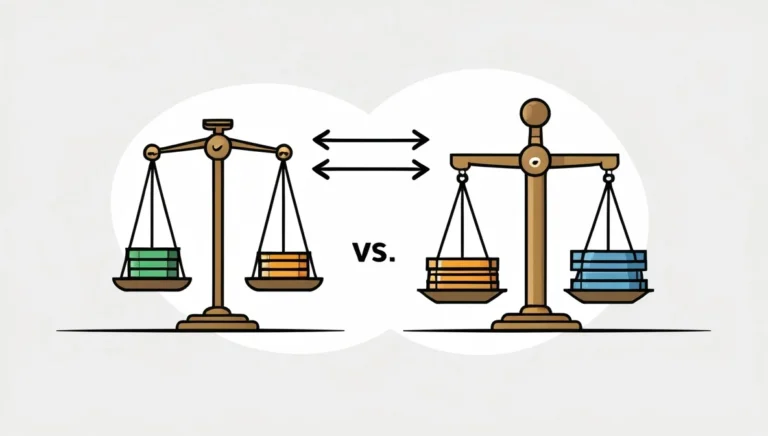
The world primarily uses two weight measurement systems.
Metric System
The metric system is based on powers of ten, making calculations straightforward.
Common units include:
- Kilogram
- Gram
- Milligram
- Metric Ton
Most countries, including those in Europe, Asia, Australia, and much of Africa, rely on the metric measurement system for everyday.
Imperial and US Customary Systems
The imperial and US customary systems use units such as:
- Pound
- Ounce
- Stone (primarily in the UK)
- Short Ton (United States)
These units remain common in the United States and are still encountered in certain industries and regions worldwide.
Understanding both systems is essential when working with international products, recipes, shipping documents, or technical specifications.
Quick Weight Conversion Reference Table
| From | To | Conversion |
|---|---|---|
| 1 kg | Pounds | 2.20462 lb |
| 1 lb | Kilograms | 0.453592 kg |
| 1 g | Ounces | 0.035274 oz |
| 1 oz | Grams | 28.3495 g |
| 1 kg | Grams | 1,000 g |
| 1 metric ton | Kilograms | 1,000 kg |
| 1 stone | Pounds | 14 lb |
| 1 pound | Ounces | 16 oz |
Popular Weight Conversion Formulas
Although a converter performs calculations automatically, understanding the formulas can be helpful.
Kilograms to Pounds
Pounds = Kilograms × 2.20462
Pounds to Kilograms
Kilograms = Pounds × 0.453592
Grams to Ounces
Ounces = Grams × 0.035274
Ounces to Grams
Grams = Ounces × 28.3495
These standardized conversion factors are used globally and remain constant regardless of location or application.
How to Use a Weight Converter Tool
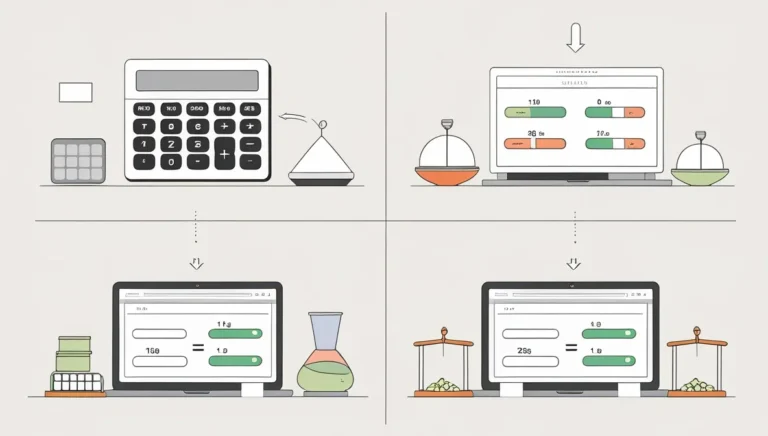
A weight converter tool is designed to make unit conversion effortless. Whether you’re converting kilograms to pounds or milligrams to grams, the process remains simple and accurate.
Step-by-Step Guide
- Enter the weight value you want to convert.
- Select the original unit (such as kilograms).
- Choose the target unit (such as pounds).
- View the converted value instantly.
- Copy or use the result as needed.
Most modern converters update the result automatically without requiring you to click a “Convert” button, making them faster and more convenient.
Example
Suppose you need to convert 75 kilograms into pounds.
- Enter: 75
- From: Kilograms
- To: Pounds
Result:
75 kg = 165.35 lb
This type of instant calculation eliminates manual errors and saves valuable time.
Popular Weight Conversion Examples
Below are some of the most commonly searched weight conversions.
| Conversion | Result |
|---|---|
| 1 kg | 2.20462 lb |
| 5 kg | 11.0231 lb |
| 10 kg | 22.0462 lb |
| 25 kg | 55.1156 lb |
| 50 kg | 110.231 lb |
| 100 kg | 220.462 lb |
Pounds to Kilograms
| Pounds | Kilograms |
|---|---|
| 1 lb | 0.453592 kg |
| 5 lb | 2.26796 kg |
| 10 lb | 4.53592 kg |
| 25 lb | 11.3398 kg |
| 50 lb | 22.6796 kg |
| 100 lb | 45.3592 kg |
Grams to Ounces
| Grams | Ounces |
|---|---|
| 10 g | 0.3527 oz |
| 50 g | 1.7637 oz |
| 100 g | 3.5274 oz |
| 250 g | 8.8185 oz |
| 500 g | 17.637 oz |
| 1000 g | 35.274 oz |
Real-World Applications of Weight Conversion

Weight conversion isn’t limited to mathematics. It plays an essential role in everyday life and professional industries.
Healthcare
Medical professionals frequently record patient weight in kilograms while some patients know their weight in pounds.
Common uses include:
- Medication dosage calculations
- Growth monitoring
- BMI calculations
- Clinical documentation
Accurate conversions reduce the risk of dosing mistakes and improve consistency across medical records.
Fitness and Bodybuilding
Fitness enthusiasts often switch between kilograms and pounds depending on their equipment or training program.
Examples include:
- Tracking body weight
- Recording lifting performance
- Comparing international workout plans
- Monitoring weight-loss progress
Many gyms outside the United States use kilograms, while American gyms commonly display pounds.
Nutrition and Diet Planning
Meal plans often include ingredient weights.
Examples:
- Protein intake
- Meal preparation
- Food labels
- Portion control
Converting between grams and ounces ensures recipes remain accurate regardless of their country of origin.
Cooking and Baking
International recipes frequently use different measurement systems.
For example:
A British recipe may require 225 grams of flour, while an American cookbook may list the equivalent in ounces.
Using precise conversions helps maintain:
- Texture
- Flavor
- Baking consistency
- Portion accuracy
Shipping and Logistics
Shipping companies calculate transportation costs using package weight.
Businesses commonly convert:
- Kilograms to pounds
- Pounds to kilograms
- Metric tons to short tons
Accurate conversions help determine:
- Freight costs
- Postal charges
- Air cargo limits
- Customs documentation
Manufacturing
Manufacturers rely on precise weight measurements during production.
Examples include:
- Raw material management
- Packaging
- Inventory control
- Product quality testing
Even a small measurement error can increase production costs or affect product quality.
Engineering
Engineers work with standardized units across international projects.
Weight conversion is frequently required when:
- Reading technical specifications
- Comparing international equipment
- Preparing engineering calculations
- Ordering materials
Using standardized conversion factors helps maintain consistency throughout the project lifecycle.
Scientific Research
Scientists generally use the International Organization for Standardization (SI).
Conversions between milligrams, grams, kilograms, and micrograms are routine in laboratories, pharmaceutical research, and environmental studies.
Precision is especially important because even slight rounding differences can influence experimental results.
Weight Conversion by Industry
Different industries rely on different units depending on regulations, customer expectations, and international standards.
| Industry | Common Units |
|---|---|
| Healthcare | kg, g, mg |
| Fitness | kg, lb |
| Cooking | g, oz |
| Shipping | kg, lb, metric ton |
| Manufacturing | kg, metric ton |
| Engineering | kg, metric ton |
| Agriculture | kg, metric ton |
| Retail | kg, g, lb |
| Laboratory | mg, µg, g |
Understanding industry-specific units helps reduce communication errors and improve operational efficiency.
Which Countries Use Which Weight Units?
Weight measurement systems vary around the world.
| Region | Preferred Units |
|---|---|
| United States | Pounds, Ounces |
| United Kingdom | Stone, Pounds, Kilograms |
| Canada | Kilograms, Pounds |
| Australia | Kilograms |
| Europe | Kilograms, Grams |
| India | Kilograms |
| Middle East | Kilograms |
| New Zealand | Kilograms |
If you work internationally, understanding these regional preferences makes communication and documentation much easier.
Why Do Different Countries Use Different Units?

The answer lies in history.
Most countries adopted the metric system because it is based on powers of ten and simplifies calculations.
The United States continues to use the US customary system for many everyday activities, while the United Kingdom maintains a mix of metric and imperial units. For example, groceries are typically sold in kilograms, but many people still describe body weight in stone and pounds.
This historical context explains why a flexible weight converter tool must support both measurement systems.
Common Weight Conversion Mistakes
Even though conversion tools are accurate, users can still make avoidable mistakes.
Selecting the Wrong Unit
Entering pounds when the original value is actually kilograms produces an incorrect result.
Tip: Always double-check the selected units before converting.
Confusing Weight with Mass
In everyday conversation, weight and mass are often treated as the same. However, scientific calculations distinguish between them.
Knowing the context helps ensure the correct measurement is used.
Rounding Too Early
Rounding intermediate values can introduce errors, especially in engineering, laboratory work, and medicine.
Keep full precision during calculations and round only the final result when appropriate.
Ignoring Decimal Places
A misplaced decimal can dramatically change a value.
For example:
- 2.5 kg is very different from 25 kg.
Carefully review decimal points before using converted measurements.
Using Outdated Conversion Factors
Standard conversion factors are fixed. Reliable tools use internationally accepted values rather than approximations.
Best Practices for Accurate Weight Conversion
To achieve consistent and reliable results:
- Use a trusted online weight converter tool.
- Verify the original unit before converting.
- Keep sufficient decimal precision for technical work.
- Round only when required.
- Use SI units for scientific calculations.
- Confirm regional unit preferences when working internationally.
- Save frequently used conversions for quick access.
- Double-check values used in healthcare, engineering, and shipping.
Following these practices reduces errors and improves confidence in your calculations.
Conversion Accuracy and Precision
Not every situation requires the same level of precision.
For everyday activities such as grocery shopping or fitness tracking, rounding to one or two decimal places is usually sufficient.
However, fields such as medicine, pharmaceuticals, aerospace engineering, and laboratory research demand much higher precision. In these environments, standardized conversion factors and careful handling of significant figures are essential to maintain accuracy and safety.
Expert Tip
If you’re converting measurements for scientific, medical, or engineering purposes, avoid estimating values. Use exact conversion factors and retain as many decimal places as your workflow requires before rounding the final result.
Weight Conversion Cheat Sheet
Keeping a quick reference table handy can save time when working with common weight conversions. Here are some of the most frequently used conversion factors.
| From | To | Multiply By |
|---|---|---|
| Kilograms | Pounds | 2.20462 |
| Pounds | Kilograms | 0.453592 |
| Grams | Ounces | 0.035274 |
| Ounces | Grams | 28.3495 |
| Kilograms | Grams | 1,000 |
| Grams | Kilograms | 0.001 |
| Pounds | Ounces | 16 |
| Ounces | Pounds | 0.0625 |
| Metric Ton | Kilograms | 1,000 |
| Kilograms | Metric Ton | 0.001 |
| Stone | Pounds | 14 |
| Pounds | Stone | 0.071429 |
Tip: Bookmark this table or keep it nearby if you regularly work with international measurements.
Weight Conversion Decision Guide
Choosing the right unit depends on your purpose. This quick guide can help.
| Purpose | Recommended Unit |
|---|---|
| Body Weight | Kilograms or Pounds |
| Medical Records | Kilograms |
| Medication Dosage | Milligrams or Micrograms |
| Cooking & Baking | Grams or Ounces |
| Shipping Packages | Kilograms or Pounds |
| Freight & Cargo | Metric Tons or Short Tons |
| Manufacturing | Kilograms |
| Laboratory Work | Grams, Milligrams, Micrograms |
| Scientific Research | SI Units (Kilograms, Grams) |
| International Trade | Metric Units |
Why Use an Online Weight Converter tool Instead of Manual Calculations?
Although manual calculations are possible, an online converter offers several advantages.
Faster Results
Conversions happen instantly, saving time when working with multiple values.
Greater Accuracy
Reliable converters use standardized conversion constants, reducing the risk of calculation errors.
Supports Multiple Units
Instead of remembering formulas for every unit, one tool can convert between kilograms, pounds, grams, ounces, stone, metric tons, short tons, long tons, and more.
Better User Experience
Modern tools are designed for both desktop and mobile devices, making them easy to use wherever you are.
Weight Converter tool vs. Manual Conversion
| Feature | Online Weight Converter tool | Manual Calculation |
|---|---|---|
| Speed | Instant | Slower |
| Accuracy | High | Depends on calculation |
| Ease of Use | Very Easy | Moderate |
| Supports Multiple Units | Yes | Limited |
| Formula Required | No | Yes |
| Error Risk | Low | Higher |
For most users, an online converter is the quickest and most reliable option.
MiniToolLab’s Other Usefull Tools
To build a strong measurement and utility content cluster, naturally link this article to:
- Length Converter Tool – Convert between metric and imperial length units.
- Area Converter Tool – Convert square units for land, construction, and real estate.
- Degree Converter Tool – Convert temperature and angle units accurately.
- Measurement Converters – Explore all measurement conversion tools in one place.
- Calculator Tools – Access financial, mathematical, and everyday calculators.
- Image to PDF Converter – Convert images into high-quality PDF files.
Frequently Asked Questions
1. What is a weight converter tool?
A weight converter tool is an online tool that converts values between different weight units, such as kilograms, pounds, grams, ounces, stone, and tons using standardized conversion factors.
2. Is a weight converter tool accurate?
Yes. Reliable converters use internationally accepted conversion factors, ensuring highly accurate results for everyday, educational, and professional use.
3. How many pounds are in one kilogram?
One kilogram equals 2.20462 pounds.
4. How many kilograms are in one pound?
One pound equals 0.453592 kilograms.
5. Is weight the same as mass?
Not exactly. Mass measures the amount of matter in an object, while weight is the force acting on that mass due to gravity. In everyday use, however, the terms are often used interchangeably.
6. Which countries use kilograms?
Most countries, including those in Europe, Asia, Australia, Africa, and South America, use kilograms as the standard unit of weight.
7. Why does the United Kingdom use stone?
Stone has been used historically in the UK for measuring body weight. Today, many people still use stone and pounds together, although kilograms are widely used in healthcare and commerce.
8. Why do Americans use pounds instead of kilograms?
The United States primarily follows the US customary system, where pounds and ounces remain the standard units for everyday measurements.
9. Can I convert metric tons into pounds?
Yes. A weight converter can instantly convert metric tons into pounds, kilograms, short tons, and long tons.
10. Can I use a weight converter tool for cooking?
Absolutely. Weight converter tools help convert grams, ounces, and pounds, making it easier to follow recipes from different countries.
11. Which unit should I use for medicine?
Medical professionals generally use kilograms, grams, milligrams, and micrograms because they align with the International System of Units (SI).
12. How many ounces are in one pound?
One pound equals 16 ounces.
13. Why are SI units preferred in science?
SI units provide a standardized measurement system that improves consistency, accuracy, and collaboration in scientific research worldwide.
14. Does rounding affect conversion accuracy?
For everyday tasks, slight rounding is acceptable. However, scientific, engineering, and medical applications often require higher precision and should use exact conversion factors.
15. Can I use a weight converter tool on a mobile phone?
Yes. Most modern online weight converter tools are fully responsive and work smoothly on smartphones, tablets, and desktop computers.
16. What is the easiest way to convert kilograms to pounds?
Enter the kilogram value into an online weight converter tool, select pounds as the target unit, and the result is calculated instantly. Alternatively, multiply the kilogram value by 2.20462.
17. Can one converter handle all weight units?
A comprehensive weight converter tool supports common and specialized units, including kilograms, grams, milligrams, pounds, ounces, stone, metric tons, short tons, and long tons.
People Also Ask
How do I convert kilograms into pounds manually?
Multiply the number of kilograms by 2.20462 to get the equivalent value in pounds.
What is the difference between pounds and kilograms?
Kilograms are part of the metric system and the International System of Units (SI), while pounds belong to the US customary and imperial systems.
Why are grams used in recipes?
Grams provide greater precision than volume-based measurements, making recipes more consistent and easier to reproduce.
What is the difference between a metric ton and a short ton?
A metric ton equals 1,000 kilograms, while a short ton equals 2,000 pounds (approximately 907.18 kilograms).
Which weight unit is best for international trade?
Kilograms and metric tons are the most widely accepted units for international commerce because they align with global measurement standards.
How accurate are online weight converter tools?
Quality converters use fixed international conversion constants, providing accurate results suitable for most personal, educational, and professional applications.
Can I convert very small measurements like micrograms?
Yes. Advanced weight converter tools support micrograms, milligrams, grams, and larger units while maintaining precision.
Conclusion
A reliable Weight Converter Tool is more than a simple calculator. It is an essential utility for anyone who works with different measurement systems, whether for personal tasks or professional responsibilities.
From converting kilograms to pounds for fitness tracking to switching between grams and ounces for cooking, or handling metric tons in logistics and manufacturing, an accurate converter simplifies complex calculations and minimizes the risk of errors.
Understanding the difference between metric and imperial systems, choosing the correct unit for your purpose, and using standardized conversion factors can improve accuracy across healthcare, education, engineering, scientific research, shipping, and international trade.
Whether you’re a student solving assignments, a chef following recipes, a traveler comparing baggage limits, or a business managing global shipments, using a dependable online weight converter tool ensures fast, precise, and hassle-free results every time.